Skip to content

Table of Contents
Acne scars can make skin look uneven long after breakouts have cleared, but the right treatment can make a noticeable difference. At RAYNĒ MEDSPA | AESTHETICS, we offer personalized options like microneedling, laser therapy, and chemical peels to target texture, discoloration, and visible scarring with a treatment plan built around your skin.
If you are ready to move beyond temporary skincare and start seeing real improvement, our team in Evans, GA, can help you choose the next step with confidence.
Why Facials Fall Short for Acne Scars
A facial can leave skin feeling cleaner, smoother, and more refreshed, so it is easy to see why many people hope it will also fade acne scars. The problem is that acne scarring is not just a surface concern. Once inflammation from breakouts damages the skin’s deeper support structure, the result can be textural changes that a standard facial cannot reach.
That difference matters. A facial may help remove dead skin cells, clear congested pores, and support hydration. Those steps can improve the look of dull or breakout-prone skin, but scars form below the outermost layer. Depressed scars, uneven texture, and lingering marks often reflect collagen loss or disruption that needs more than cleansing and exfoliation.
This is why patients often say their skin feels better after a facial but the scars still look the same. They are noticing two separate issues. Surface buildup may improve, while the deeper changes caused by past acne remain in place. In most cases, effective acne scar treatments need to stimulate collagen, resurface damaged skin, or target discoloration more directly than a facial can.
What Acne Scars Actually Need
Successful medical treatments for acne scars are chosen based on the type of scar, the patient’s skin tone, and the overall condition of the skin. Some acne scars create shallow unevenness. Others are more defined, with visible indentations or rough patches. Post-inflammatory discoloration can also sit alongside true scarring, which is one reason treatment plans sometimes combine more than one method.
A useful way to think about this is simple: facials maintain skin, but scar revision works to remodel it. That does not mean every patient needs an aggressive procedure. It means the plan has to match the depth and character of the scarring. Three of the most widely used options are microneedling, laser therapy, and chemical peels.
Microneedling for Acne Scars
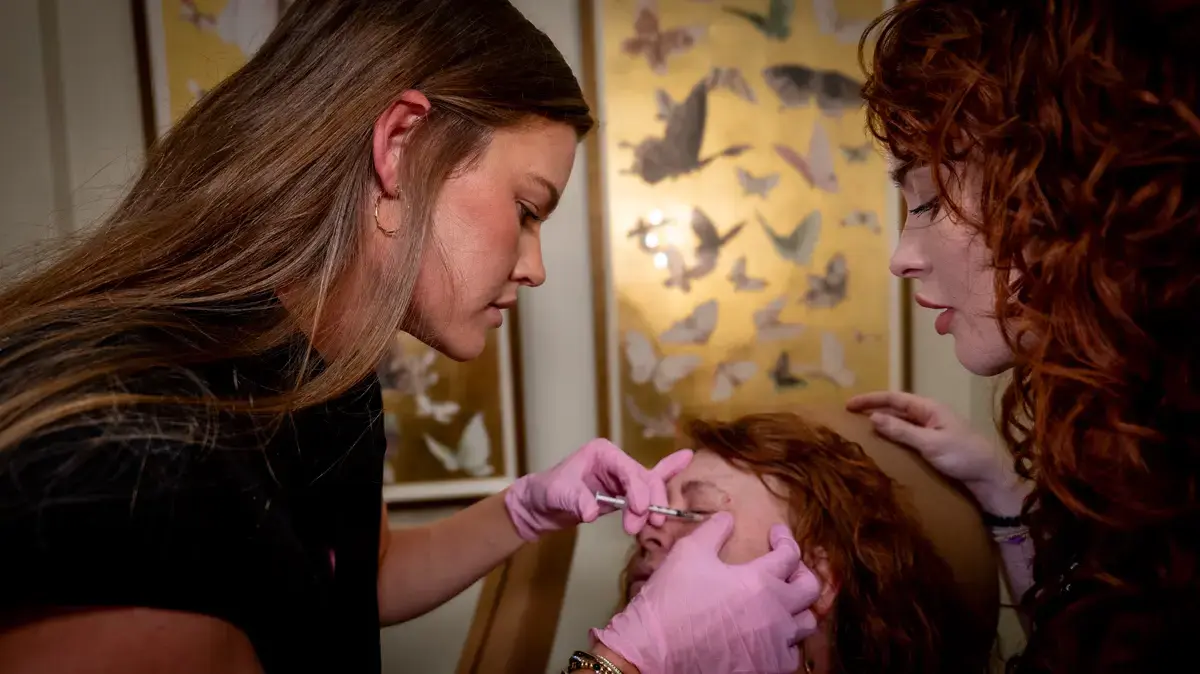
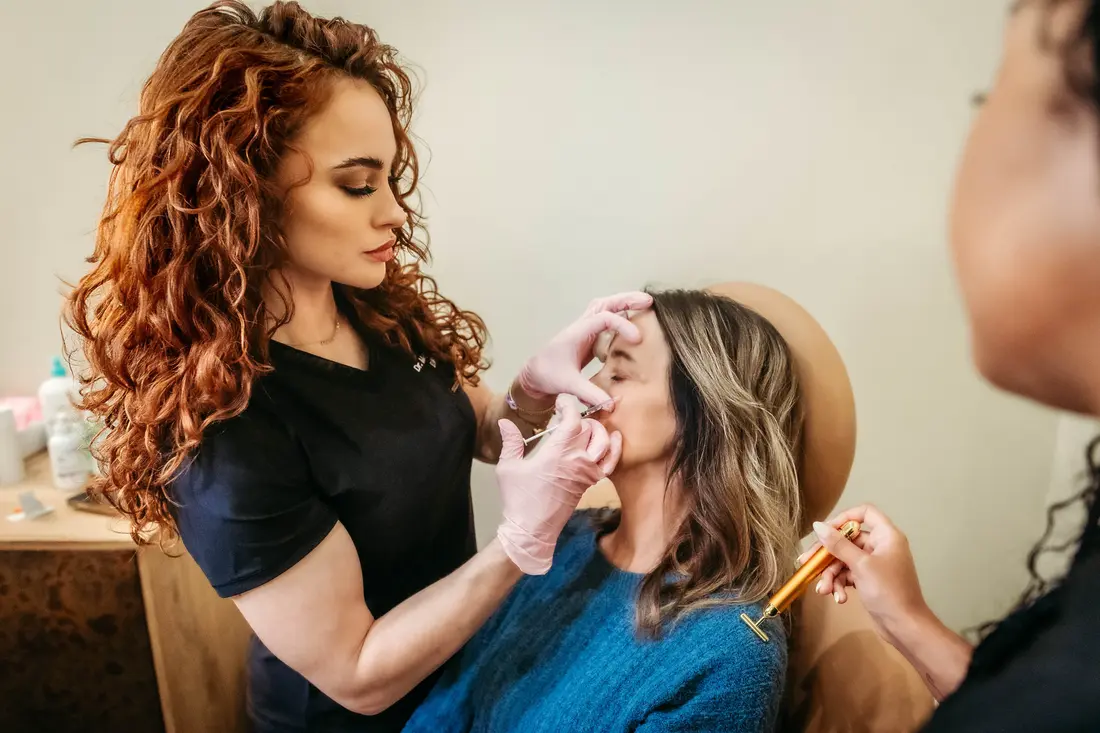
Among today’s options, microneedling for acne scars is often discussed because it addresses texture without relying on heavy resurfacing. This specific treatment uses very fine needles to create controlled micro-injuries in the skin. In response, the body produces new collagen and elastin, which can gradually improve the appearance of certain acne scars.
Microneedling is often a good fit for patients with mild to moderate textural scarring who want improvement over a series of sessions. Results tend to build over time rather than appearing all at once. That gradual response can appeal to patients who want visible change without a long recovery period. It can also be useful for people looking to soften roughness and support smoother skin quality overall.
Still, microneedling is not a cure-all. Deep ice pick scars or sharply defined scars may need a broader treatment plan. The value of microneedling lies in how it encourages the skin to rebuild support from within. For many patients, that makes it one of the most practical forms of acne scars treatment when texture is the main concern.
Laser Therapy and Deeper Skin Resurfacing
Laser therapy is another established option in the world of acne scar treatments.
Unlike a facial, laser-based treatment can reach deeper layers of skin and trigger more significant remodeling. Some lasers focus on resurfacing the skin’s outer layers. On the other hand, others work beneath the surface to stimulate collagen and improve tone.
This treatment can be especially helpful for patients dealing with visible textural changes, uneven skin surface, or persistent marks left behind by inflammatory acne. A carefully selected laser approach may improve skin smoothness while also helping reduce contrast between scarred and surrounding areas.
Laser therapy is not identical for every patient. Skin tone, scar depth, sensitivity, and downtime preferences all influence the right choice. That is one reason professional evaluation matters. The best approach is rarely based on what is most talked about online. It is based on what the skin actually needs.
For the right candidate, laser therapy can be an important part of medical treatments for acne scars, especially when a patient wants to address both texture and pigment at the same time.
Chemical Peels and Refinement of Tone and Texture
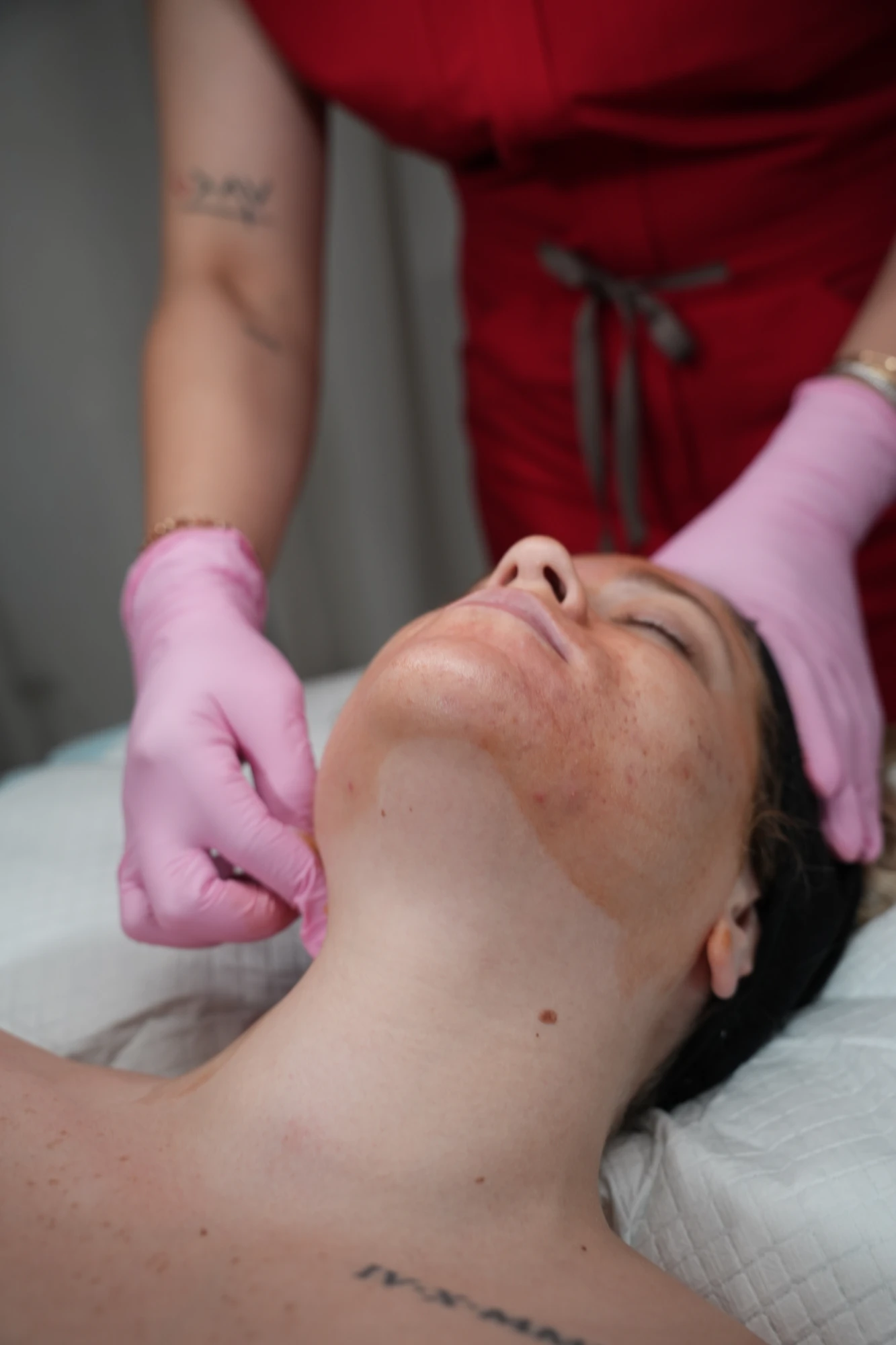
Chemical peels are sometimes underestimated since many people associate them with basic exfoliation. In a clinical setting, however, peels can do more than brighten the skin temporarily. Depending on the strength and formula used, a peel can improve uneven tone, refine rough texture, and support a clearer, smoother complexion over time.
This makes chemical peels useful for patients whose acne history has left behind a mix of discoloration and shallow textural changes. In some cases, a peel may be recommended on its own. In others, it can work alongside microneedling or laser therapy as part of a larger plan.
One of the known benefits of chemical peels is that they can target visible dullness and post-acne marks while also supporting skin renewal. At the same time, realistic expectations are vital. Peels are helpful, but deeper scars often need more than one category of treatment. A peel can improve the overall look and feel of the skin, yet the best outcome depends on choosing the right level of treatment for the severity of scarring.
Why Treatment Selection Matters More Than Trends
Patients often search for one best answer, but acne scarring does not work that way. A treatment that helps one person may not make sense for another. Someone with mild uneven texture may do well with microneedling.
Someone with more visible surface damage may benefit from laser therapy. A patient dealing with discoloration and roughness might respond well to a chemical peel as part of care.
That is why the phrase acne scars treatment should never mean one standard service for everyone. It should mean a thoughtful process that looks at scar type, skin tone, sensitivity, and desired recovery time. Good care is not about chasing the newest idea. It is about choosing what is appropriate, then giving the skin enough time and consistency to respond.
RAYNĒ MEDSPA | AESTHETICS Acne Scars Treatment in Evans, GA
For patients seeking acne scars treatment Evans GA, RAYNĒ MEDSPA | AESTHETICS offers non-invasive and minimally invasive options designed to improve the appearance of scars caused by acne and other skin concerns. Their scar treatments focus on smoothing the skin’s surface, stimulating collagen production, and improving overall texture so the skin looks more even over time.
Depending on the type and severity of the scar, treatment options may include microneedling for acne scars, laser therapy, chemical peels, or advanced topical products that support healing and skin renewal. This approach is intended to address both texture and discoloration, which are often part of the same concern for patients with acne scarring.
Schedule a consultation to explore medical treatments that improve acne scars.
Frequently Asked Questions
What is the best acne scar treatment for uneven skin texture?
The best acne scars treatment depends on the type and depth of scarring, though microneedling, laser therapy, and chemical peels are commonly used for texture concerns.
Is microneedling for acne scars effective?
Microneedling for acne scars can help stimulate collagen production and gradually improve the appearance of mild to moderate textural scarring.
How many sessions of acne scar treatments are usually needed?
Most acne scar treatments require multiple sessions because improvement happens gradually as the skin repairs and rebuilds collagen over time.